White Marsh yards break into two very different mosquito problems, and the treatment plan is not the same for both. Newer developments like Greenleigh and Honeygo Village have small, fenced rear yards with young…
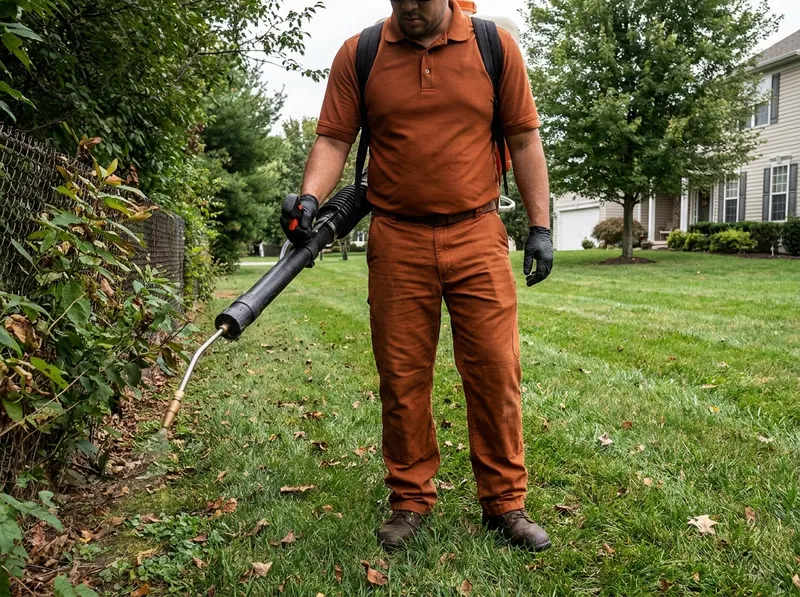
White Marsh yards break into two very different mosquito problems, and the treatment plan is not the same for both. Newer developments like Greenleigh and Honeygo Village have small, fenced rear yards with young landscaping, drip trays, downspout extensions, and construction-era low spots — that is Asian tiger mosquito territory. Asian tiger mosquitoes breed in containers holding as little as a bottle cap of water, bite in daylight, and rarely travel more than a couple hundred feet from where they hatched, which means the source is almost always inside your own fence or your neighbor's. Older wooded lots in Cowenton, Nottingham Ridge, and around The Vineyards of White Marsh usually have mature tree canopy, ivy, and a leaf-litter edge; those yards need the shaded harborage and the wood line treated, and the tick component matters far more.
Ticks in this part of Baltimore County live at the transition zone, not in the middle of a mowed lawn. Properties backing to the Honeygo Run and Whitemarsh Run stream corridors, the trail edges near Honeygo Run Regional Park, or the deer runs coming out of the Days Cove and Sweathouse Branch sections of Gunpowder Falls State Park see steady deer traffic, and deer bring blacklegged and lone star ticks to the last few feet of your property. A tick-focused treatment concentrates on that band — leaf litter, ground cover, the base of the fence, stone walls, and any woodpile — because that is where a dog or a kid picks one up. Treating the open lawn while ignoring the wood edge is the most common reason a yard keeps producing ticks.
Here is the trade-off worth understanding before you spend anything. A barrier treatment kills and repels the adults present now and generally holds for around three weeks before rain, mowing, and new growth wear it down — that is why season programs run on a roughly 21-day cycle from spring through October rather than as one-and-done. A single treatment makes sense for a graduation party, a backyard wedding, or a weekend on the deck; schedule it two to three days ahead so the application has settled. A multi-visit program makes sense if you actually intend to use the yard all summer. What treatment cannot do is out-spray a water source. If your problem is a clogged gutter run, a tarp holding rain, a corrugated downspout extension full of water, or a neighbor's unused kiddie pool, we will tell you to fix the water before we sell you another visit — one productive container can out-produce everything a spray accomplishes.
Townhomes along the Route 43 corridor and shared-fence lots near the White Marsh Business Community add one more wrinkle: mosquito pressure and tick edge often sit on the property line, and treatment stops at your boundary. We will show you where the harborage sits, note what belongs to the adjoining yard, and treat every inch of your side including the fence base and any ivy climbing it. No fogging the whole yard for show, and no vague "pest package" — you get a walk-through, the specific resting sites we found, and a plan you can repeat or stop at any time. Call (667) 310-2756 and we will look at the yard first.
Every job gets a firm, written price after a free on-site visit.
Tell us about your mosquito and tick yard treatment job in White Marsh and we'll send a clear, written quote — usually the same day.
 Orvexa Bug Solutions