Pest control service White Marsh homeowners can reach at 10pm after a roach crosses the kitchen counter is what this page is about, and the first step is never a spray — it is identification. Our technicians work the Route 43 corridor daily, from the Greenleigh and Honeygo Village townhomes to the older houses off Cowenton Avenue and Ebenezer Road, and the pest pressure is genuinely different between those two building types.
No forms — call now for a fast, no-pressure quote.
📞 Call (667) 310-2756
Pest control service in White Marsh, MD is licensed inspection, targeted treatment and entry-point exclusion work that identifies the exact pest inside a home or business, ends that infestation, and closes the gaps it used to get in.
Every service reflects the same meticulous attention to detail — whether it's a single job or a larger pest control service project across White Marsh.
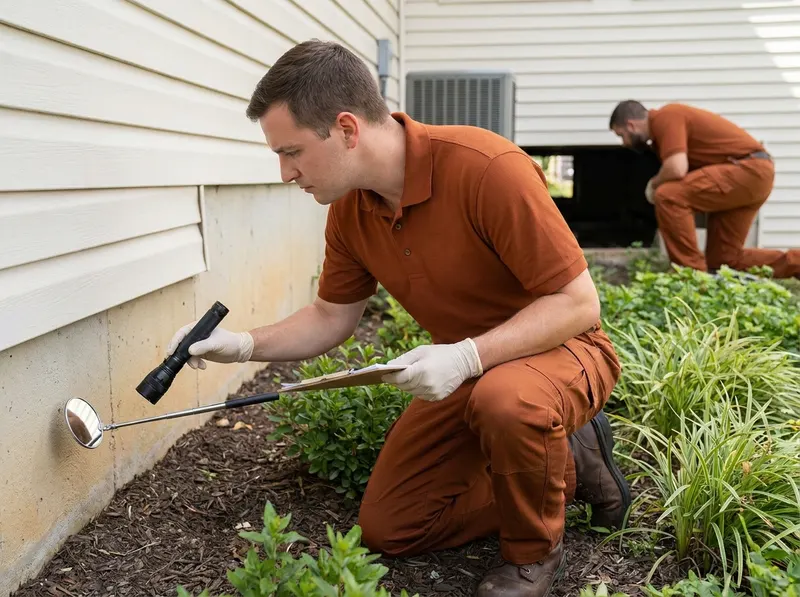
A full walk-through that names the pest before anything is applied. The technician checks the usual White Marsh entry points — sill plates, dryer and bath vents, garage door corners, hose bibs, the gap where the front stoop meets brick, basement window wells — plus interior evidence like droppings under the sink, shed skins behind the fridge, mud tubes on a foundation wall, or frass at a window frame. You get told what species it is, where it is getting in, how established it looks, and what the realistic timeline is. We do not blind-fog a house to look busy. A verbal quote from that inspection is free. If you need documentation instead — a written report with findings and photos for a sale, a landlord, an HOA or an insurance file — that is a paid inspection starting at $250. Text photos to (667) 310-2756 first if you want a preliminary read before an appointment, since a clear photo of a wing pile, a dropping or the insect itself frequently settles the species question in a minute.
View details →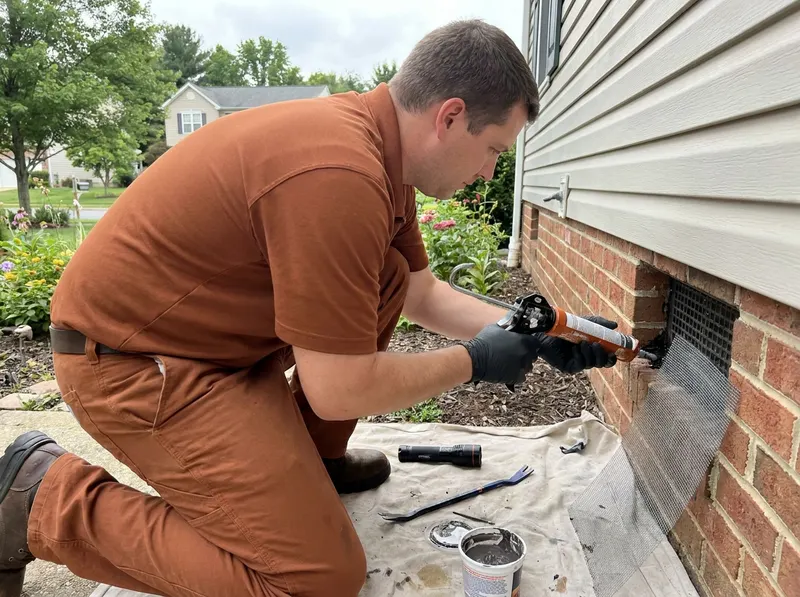
Rodent work that includes the sealing, because trapping alone is a rental agreement with the next mouse. House mice press indoors across White Marsh from October through February, and the routes are predictable: garage door bottom corners, unsealed dryer vents, gaps around gas and water penetrations, and the void behind a finished basement stairwell. Our technicians place traps and secured bait stations where the activity actually is, then close the gaps with materials a rodent cannot chew through, and return to confirm the activity has stopped rather than assuming it has. In townhomes off Route 43, we check the shared-wall side and the utility chase, since one neighbor's open pipe penetration feeds three units. Expect an initial visit plus one or two follow-ups. Norway rats near the older sheds and alley garages around Cowenton get burrow-focused work outside, not just interior traps. A mouse only needs a gap the width of a pencil, which is why the inspection measures openings instead of guessing at them .
View details →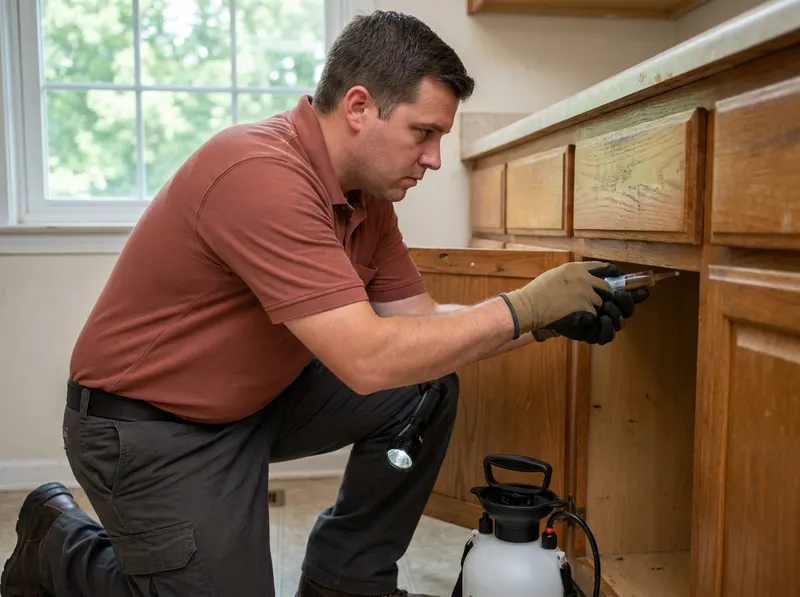
Targeted kitchen and bathroom work for the small roach that lives indoors year-round and does not come from your yard. German cockroaches ride in on grocery boxes, appliances and moving trucks, then nest in the warm voids of a dishwasher, a fridge motor housing, a cabinet hinge or a hollow door frame. Treatment is gel bait in cracks, insect growth regulator to shut down the egg cycle, and monitors to prove the count is dropping — not a baseboard spray, which scatters them into adjoining rooms and, in a shared-wall unit, into your neighbor's. Plan on two to three visits about two weeks apart, since egg cases hatch after the first knockdown. You will get a short prep list you can actually finish in an evening: clear the sink cabinet, pull the toe-kick items, bag the loose cereal boxes. If you are seeing large reddish roaches in the basement instead, that is a different insect and a different, cheaper treatment — we will tell you which you have before you pay for the wrong course.
View details →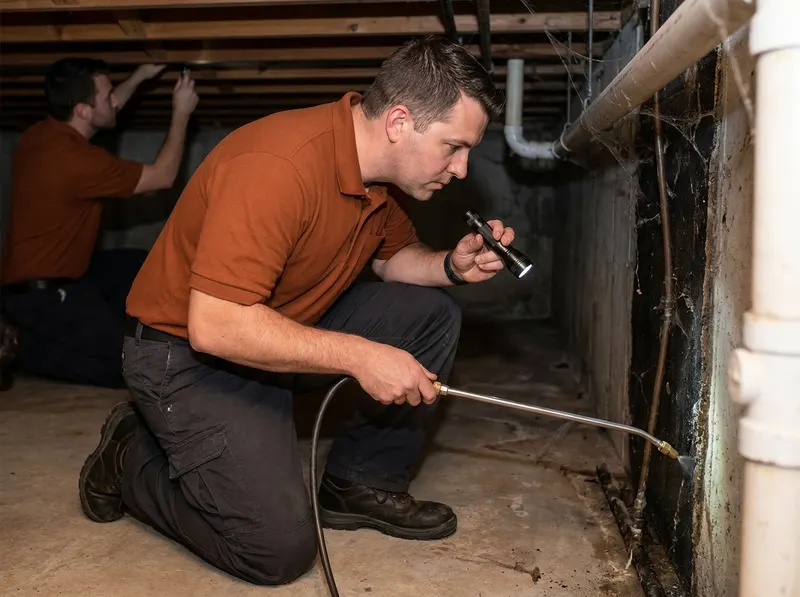
Treatment for the large, occasional invaders that come up from drains, sump pits and damp block walls rather than living in your kitchen. American cockroaches — the big reddish-brown ones people find in a laundry room at midnight — travel sewer laterals and floor drains, so the fix is drain and void treatment plus sealing the obvious access, not a whole-house interior spray. Camel crickets, the humpbacked hopping insects that pile up in unfinished White Marsh basements and crawlspaces, are a humidity problem first: they follow damp block, window wells and mulch beds. Our technicians treat the perimeter band and the interior harborage, then point out the moisture and grading conditions feeding it — a downspout dumping at the foundation, a window well without a cover, mulch stacked above the sill. This is usually a single visit with a follow-up check, and it is one of the cheaper problems on this page.
View details →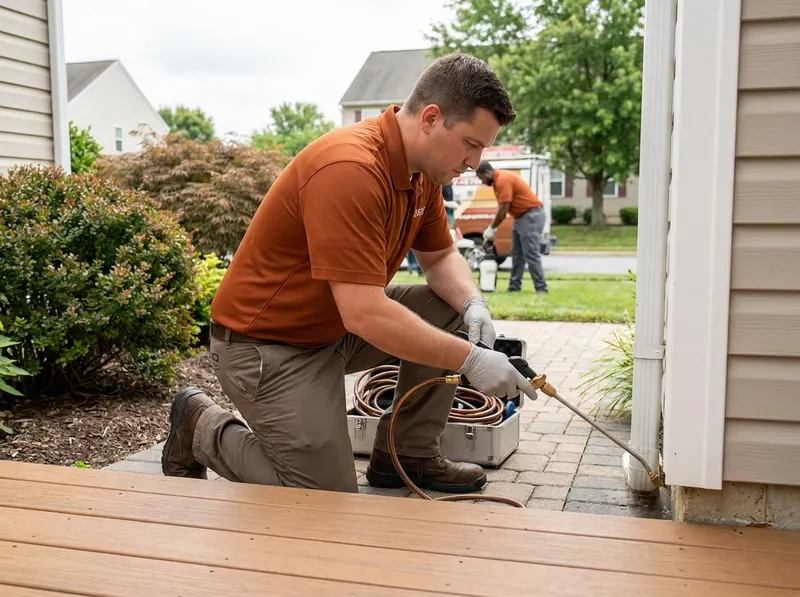
Ant treatment matched to the species, because the two common White Marsh ants need opposite approaches. Odorous house ants — the ones that smell faintly of coconut when crushed and trail across a counter in April and May — are a baiting problem; spraying the trail kills fifty and splits the colony into satellites. Carpenter ants are a moisture-and-wood problem, and we look for the source: a leaking hose bib, a rotted deck ledger, mulch banked against siding in the Honeygo Village beds, or a tree limb touching the roofline. Our technicians bait interior trails, treat the exterior foundation band and known nest voids, and point out the repair or grading fix that keeps it from repeating. In spring we also confirm you are not looking at swarming termites, which are frequently mistaken for winged ants and need a completely different response — winged ants have a pinched waist and unequal wings, termite swarmers do not.
View details →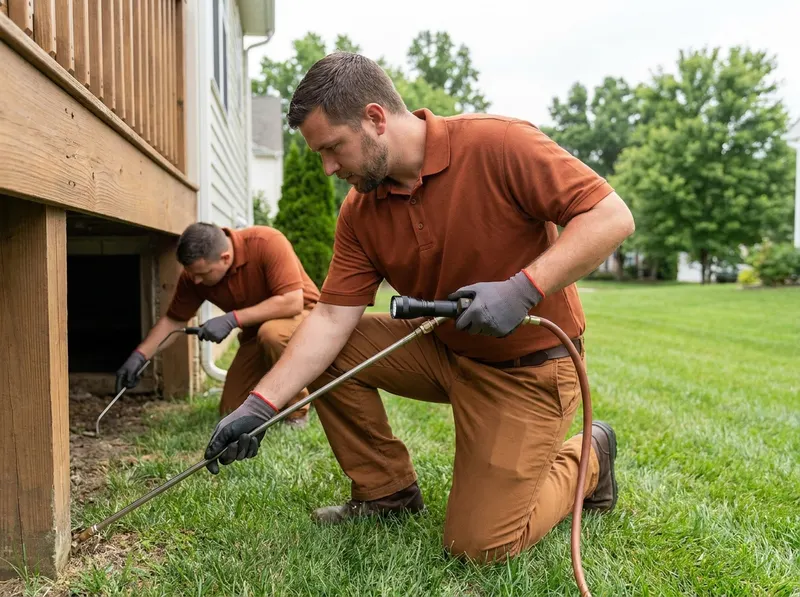
Subterranean termite work for Baltimore County's clay soils, which hold moisture against foundations and keep termite pressure steady on both slab-built and basement homes. Swarms show up on warm days from late March into May, usually as piles of equal-length wings on a windowsill or a mud tube running up a basement wall or garage block. Our technicians probe accessible framing, sill plates, joist ends and exterior foundation lines, then explain what was found and what it means for the structure. Options include a localized treatment at a confirmed active area or a full liquid barrier around the foundation, with monitoring where a full treatment is not warranted yet. Maryland regulates termite treatments and applicators through the Maryland Department of Agriculture, so ask any company for its license before work starts. Pricing spans a wide range because linear foundation footage and access drive the cost — confirmed on-site, never guessed by phone .
View details →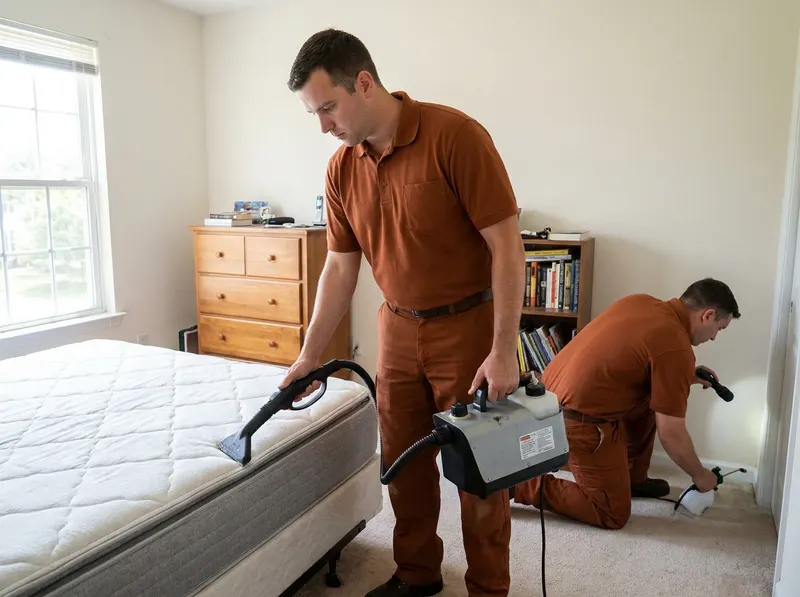
Room-by-room bed bug work with confirmation before treatment, since bites alone are not a diagnosis. The technician inspects mattress seams, box spring corners, headboard fasteners, nightstand joints and the carpet edge behind the bed, and looks for live insects, cast skins and the small dark spotting on sheets that people usually notice first. Treatment is applied to harborage, not broadcast across a room, with follow-up visits about two weeks apart to catch newly hatched insects. You will get honest prep instructions and an honest timeline — anyone promising one visit and done is selling you something. Mattress encasements are worth discussing. This matters most in the White Marsh apartment and townhome stock, where a single unit rarely stays a single unit: if a neighboring wall is involved, tell your property manager early so the adjoining unit can be inspected while yours is being treated.
View details →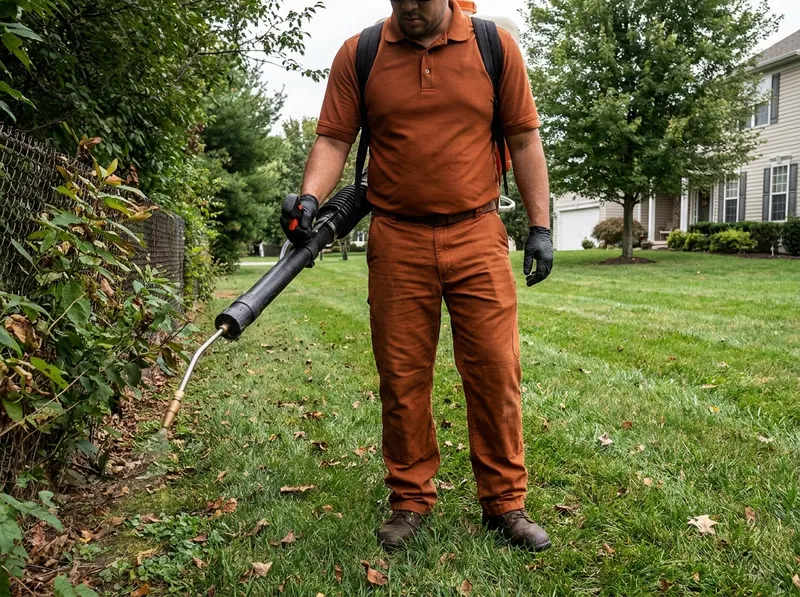
Exterior yard work aimed at the resting sites mosquitoes actually use, which is why a treated yard feels different and an untreated one does not. Mosquitoes rest in shade during the day — under deck framing, in ivy and pachysandra beds, in the low branches of arborvitae and along fence lines — so applications go to foliage and structure undersides rather than being sprayed across open lawn. Ticks come with the tree lines and tall edges, and the properties backing to the Honeygo Run and Whitemarsh Run stream corridors and the Gunpowder Falls State Park land near Days Cove carry more tick pressure than an interior lot in a townhome block. Our technicians also find and dump the breeding water most people miss: a clogged gutter corner, a tarp over patio furniture, a kid's wagon, a saucer under a planter, the low spot by the downspout. Book a single application before a party, or a season series from May into September for a yard you use every evening.
View details →Pest control service in White Marsh, MD is licensed inspection, targeted treatment and entry-point exclusion work that identifies the exact pest inside a home or business, ends that infestation, and closes the gaps it used to get in.
You get a firm, itemized quote for your pest control service before any work begins — no surprises, no pressure.
Careful prep, tidy work, and a full cleanup when we are done. We treat your home and belongings like our own.
The same trusted, background-checked team from the first call to the final check.
The real decisions in pest control are one-time versus recurring, interior versus exterior, and killing versus sealing — and the right answer depends on your building, not on a sales script. If you have one clear problem in one place — a wasp nest under the deck rail, ants trailing across a single kitchen counter, a mouse in the pantry of a house with a tight foundation — choose a one-time targeted treatment starting at $250 and stop there. If you live in a shared-wall townhome off Honeygo Boulevard or in Greenleigh, where a neighbor's kitchen is four inches from yours, a recurring perimeter program at roughly $250 to $350 per visit makes more sense, because the pressure is coming from outside your walls and will keep coming whether you treat once or not. The trade-off is straightforward: one-time work is cheaper and ends when the pest ends, while a quarterly program costs more over a year but keeps a treated barrier on the foundation during the two windows that actually matter here — spring ant and termite swarm season and the September stink bug push. For rodents, the choice is bait versus exclusion. If you want the activity to quiet down fast, trapping and baiting does that in days. If you want it to stay quiet, exclusion — sealing dryer vents, sill plate gaps, garage door corners, utility penetrations — is the part that lasts, and the trade-off is a few hundred dollars more and a longer appointment now instead of a repeat call every winter. For termites, a full liquid soil barrier around the foundation is the heavier option at the top of the range and protects the whole structure; a localized treatment at a single active area costs far less but only addresses what was found that day, which is a reasonable choice on a slab-built home in Nottingham Ridge with one small area of activity and a plan to re-inspect. Bed bugs split the same way: treating a single bedroom is cheapest, but if bites are showing in two rooms, treating both at once costs more up front and avoids paying twice as the population walks down the hall. For mosquitoes and ticks near the Honeygo Run and Whitemarsh Run corridors, a single application before a graduation party is the right call at $250 to $425; a season series from May into September costs more but is the only version that meaningfully changes how usable a back yard is in July. Interior versus exterior is a real fork too: German cockroaches, bed bugs and pantry moths live inside and are solved inside, while ants, stink bugs, spiders, camel crickets and mice are outdoor insects and animals that found a hole — for those, the exterior work is the actual repair and the interior application is only the cleanup. If your budget only covers one of the two, spend it outside on a mouse or stink bug problem, and spend it inside on a roach or bed bug problem. And if you rent or manage a unit, a one-visit clearance before a move-in is enough when the unit is empty; an occupied unit with a shared wall needs the neighboring unit checked too, which means talking to the HOA or the property manager — the trade-off is a slower start in exchange for not treating the same apartment three times.
Every project gets a firm, written price after a free on-site visit. Ranges below for orientation.
Tell us about your pest control service job and we'll send a clear, written quote — usually the same day. Or just call and talk to a real White Marsh pro.
(667) 310-2756Free estimates for White Marsh & the surrounding area.
 Orvexa Bug Solutions